Electrification Action Plan: a welcome boost for waste heat, but definitions must keep pace with ambition
Brussels, 17 July 2026 – ESWET, the European Suppliers of Waste-to-Energy Technology, welcomes the Electrification Action Plan adopted today as a clear acknowledgement that Europe’s path to energy independence does not run through electricity alone. By placing renewed emphasis on waste heat recovery as a pillar of Europe’s energy transition, the Commission has put in place measures to reach the target of supplying 11% of EU heat demand from waste heat recovery by 2050.
Investment in heat recovery infrastructure is a precondition for delivering on the Plan’s waste heat ambition. The concrete financing measures put forward, including the mobilisation of the Energy Efficiency Financing Coalition, industrial heat auctions under the Innovation Fund, and support for cluster-based partnerships linking waste heat sources to users, are a step in the right direction. To maximise the available potential across Europe, financing instruments should avoid excluding eligible heat sources and instead support projects based on their contribution to EU climate, energy, and circular economy objectives.
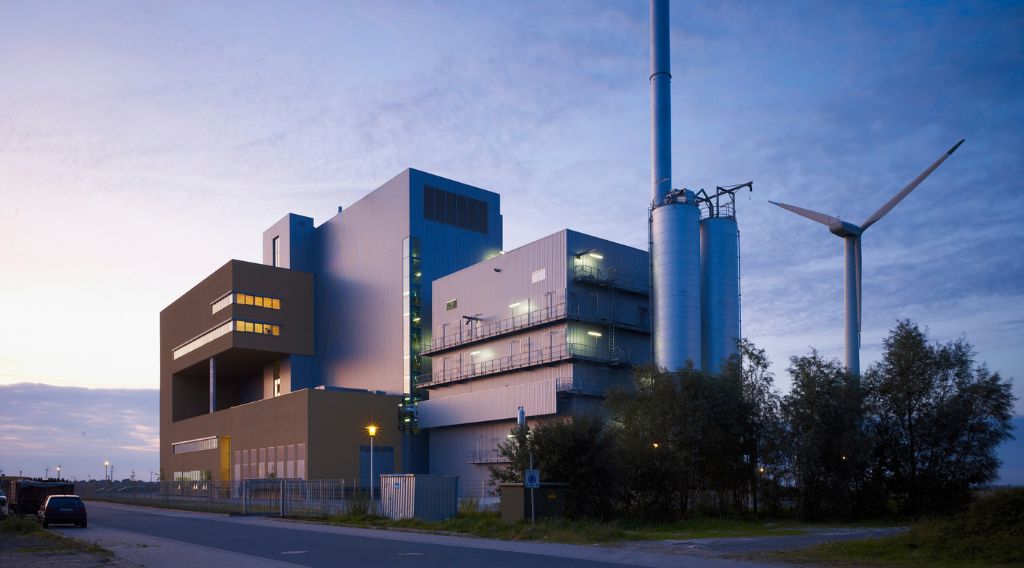
Waste-to-Energy (WtE) has long been a major contributor of recovered heat to district heating and cooling systems across Europe. With circa 500 plants operating in the EU, the sector already supplies approximately 10% of Europe’s district heating energy, covering more than 50% of district heating needs in cities such as Brescia and Malmö. In 2024, European WtE produced around 39 billion kWh of electricity and around 76 billion kWh of heat[i]. Operating around the clock in Combined Heat and Power mode, these plants provide baseload, dispatchable, locally sourced, and partly renewable energy, independent of volatile fossil fuel markets.
However, the current regulatory framework creates an incoherent situation. Under the Renewable Energy Directive (RED), heat recovered from a WtE plant qualifies as “waste heat” when supplied to a district heating network, but the very same heat loses that recognition when supplied to an industrial user.
Recovered heat that displaces fossil fuels delivers the same benefit to the energy system regardless of who receives it. The absence of a district heating network should not prevent heat supplied to industrial users from counting towards Europe’s energy efficiency objectives and renewable energy targets.
To realise the full potential of the Electrification Action Plan for waste heat, ESWET calls on EU policymakers to:
- Adopt a use-neutral definition of waste heat, recognising recovered heat wherever it displaces fossil fuels – whether supplied through a district heating network or directly to an industrial, commercial, or public user.
- Ensure that heat classifications, renewable, waste heat, and high-efficiency cogeneration, are treated as complementary, not mutually exclusive.
- Protect the competitiveness of WtE recovered heat under EU climate policies, ensuring that carbon pricing mechanisms do not make recovered heat less attractive than fossil-based alternatives.
- Adopt lifecycle-based accounting for WtE emissions that captures avoided fossil-fuel use, avoided landfill methane emissions, and the climate and efficiency benefits of recovered heat.
- Recognise WtE’s wider contribution to the energy system and circular economy, including enhanced energy security, reduced reliance on imported fuels, the use of locally available resources, and the recovery of secondary raw materials.
- Incentivise stable, long-term investments in heat network expansion, direct industrial connections, and thermal storage to maximise the use of available recovered heat.
As discussions on the forthcoming Energy Union Package begin, ESWET urges policymakers to seize this opportunity to align the regulatory framework with the Electrification Action Plan’s ambitions and unlock the full potential of recovered heat across Europe.
“We welcome the Commission’s renewed emphasis on waste heat, but the current definitions work against leveraging its full potential. A Waste-to-Energy plant supplying heat to a factory next door is delivering exactly the same benefit as one connected to a district heating network. The regulatory framework should reflect that, and the upcoming Energy Union Package is the moment to fix this.” said Patrick Clerens, ESWET Secretary General.
[i] ESWET estimation based on Eurostat (2025). Energy balances (nrg_bal). Eurostat. https://ec.europa.eu/eurostat/cache/metadata/en/nrg_bal_esms.htm.
Download the press release in PDF format: ESWET Press Release on Electrification Action Plan.
—
ESWET – the European Suppliers of Waste-to-Energy Technology – represents companies that have built and supplied over 95% of the Waste-to-Energy plants in operation in Europe. It seeks to promote the technologies that recover both energy and materials from non-recyclable waste. Learn more at eswet.eu.
Media contact
Thibaud de Bondy
Communications & Events Officer
t.debondy@eswet.eu || Phone: +32.2.743.29.88