ESWET welcomes AccelerateEU: Waste-to-Energy key to energy security and District Heating expansion
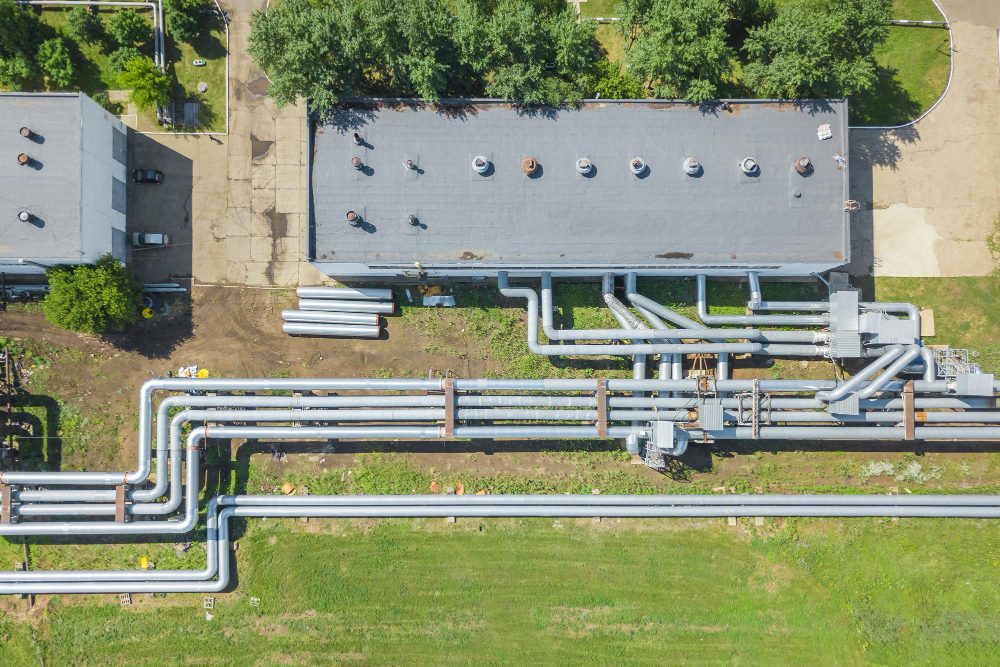
Brussels, 22 April 2026 – ESWET, the European Suppliers of Waste-to-Energy Technology, welcomes the European Commission’s AccelerateEU Plan adopted today as a necessary answer to the energy price volatility stemming from the latest energy crisis and Europe’s continued exposure to fossil fuel imports. We particularly recognise the identification of district heating (DH), waste heat recovery and homegrown clean energy generation as key levers to strengthen Europe’s energy resilience. Waste-to-Energy (WtE) technology is uniquely positioned to deliver on all those fronts.
WtE plants are among Europe’s most efficient and reliable suppliers of district heating. Operating 24 hours a day, 7 days a week, WtE facilities provide dispatchable, dependable baseload heat and electricity to millions of European households and industries. In 2024, European WtE generated around 39 billion kWh of electricity and around 76 billion kWh of heat[1]. More than 50% of it comes from biogenic sources and is therefore renewable. Complementing intermittent energy sources, WtE plants deliver energy precisely when and where it is needed, making them a necessary pillar of any resilient and reliable energy infrastructure.
The Commission’s plan sets out an ambitious target to expand DH coverage across the EU, with a significant share to be supplied from recovered waste heat. WtE plants are already the backbone of DH networks in countries such as Denmark, Sweden, the Netherlands, France and Germany, delivering heat at very high efficiencies, frequently exceeding 85–90% total energy recovery rates. Scaling up these networks, and connecting more WtE facilities to them, is one of the fastest and most cost-effective ways to displace fossil-fuel consumption in the heating sector.
WtE also contributes to the affordability of energy systems. By relying on locally available, non-recyclable waste, it avoids exposure to volatile global fuel markets and provides stable, predictable energy costs. In DH, WtE heat is often among the most competitively priced sources compared to fossil-based alternatives, while the combined production of heat and electricity helps reduce overall costs for utilities and consumers.
Through these measures, WtE contributes to lower fossil fuel imports into the EU, increasing the climate benefits of the sector while also supporting EU energy security and more affordable energy prices.
As an order of magnitude, the amount of useful energy (electricity and heat) generated by WtE in the EU in 2024 was equivalent to 15.7 billion cubic metres of natural gas. This corresponds to 39% of the natural gas imports to the EU from Russia (approximately 41 billion cubic metres in 2025) and to 20% of the corresponding imports from the United States of America (approximately 79 billion cubic meters in 2025)[2].
Europe cannot afford to leave any homegrown energy asset behind. With circa 500 WtE plants operating across the EU, supplying electricity and heat to millions of citizens and businesses, the sector contributes to European energy independence, through expanded district heating connections, waste heat valorisation and material recovery.
“The Commission’s plan is a strong signal that Europe is serious about energy independence. Waste-to-Energy plays a critical role in enhancing European energy security as it delivers a reliable energy supply from a continuous, non-interruptible feedstock of non-recyclable waste. Furthermore, as traditional renewable energy sources require critical raw materials to be deployed, their recovery from Waste-to-Energy bottom ashes decreases Europe’s reliance on third countries for these essential feedstocks”, said Patrick Clerens, ESWET Secretary-General.
—
ESWET – the European Suppliers of Waste-to-Energy Technology – represents companies that have built and supplied over 95% of the Waste-to-Energy plants in operation in Europe. It seeks to promote the technologies that recover both energy and materials from non-recyclable waste. Learn more at eswet.eu.
Media contact:
Daniela Berretta
Email: d.berretta@eswet.eu || Phone: +32 492 361716
[1] ESWET estimation based on Eurostat (2025). Energy balances (nrg_bal). Eurostat. https://ec.europa.eu/eurostat/cache/metadata/en/nrg_bal_esms.htm.
[2] European Council (nd). Where does the EU’s gas come from? European Council. Available at: https://www.consilium.europa.eu/en/infographics/where-does-the-eu-s-gas-come-from/.